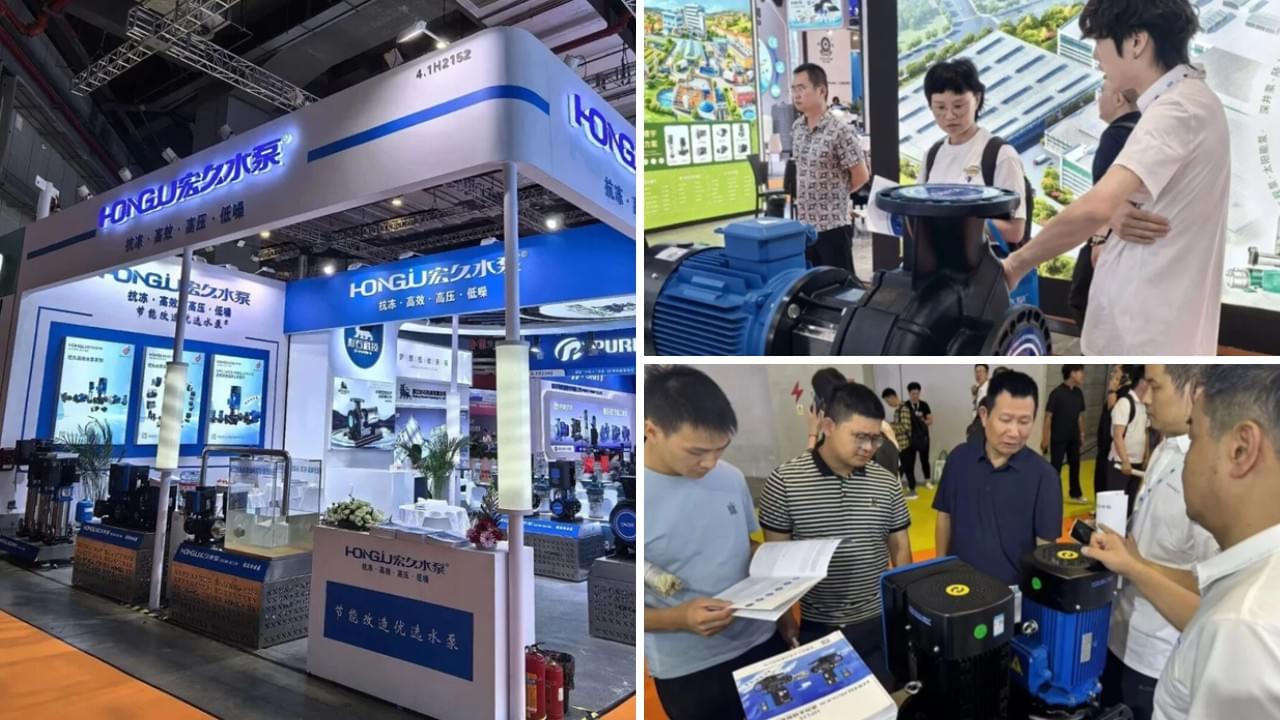








China produces over 30 million water pump units annually, making it the world’s largest pump manufacturing country. With thousands of factories competing for international business, finding a trustworthy China water pump manufacturer requires a structured evaluation process. Selecting the wrong supplier risks receiving substandard products, facing production delays, and discovering there is no after-sales support when problems arise.
This guide — drawn from Hongjiu Water Pump’s 18 years of manufacturing and export experience — provides a clear seven-point evaluation framework that every international buyer should apply before committing to a supplier.
Why China Water Pump Manufacturer Verification Matters
The gap between a professional pump manufacturer and an unreliable supplier can be enormous. Professional manufacturers invest heavily in quality control, testing equipment, and engineering capability. Unreliable suppliers cut corners on materials, skip testing, and cannot provide the technical documentation that international projects require.
The consequences of choosing poorly extend beyond the initial purchase price. A pump failure in a commercial building can cause flooding damage, tenant complaints, and emergency replacement costs. In industrial applications, pump failure can halt production entirely. The cost of a single quality failure typically exceeds any savings from choosing a cheaper supplier.
Step 1: Verify ISO Certifications and Regulatory Compliance
ISO certifications form the foundation of any professional manufacturing operation. They prove the company has implemented internationally recognized management systems for quality, environmental responsibility, and worker safety.
Essential Certifications to Verify
ISO 9001:2015 for quality management systems confirms the manufacturer follows documented procedures for process control, inspection, and continuous improvement. This certification ensures consistent product quality from batch to batch.
ISO 14001:2015 for environmental management systems demonstrates responsible manufacturing practices and environmental compliance — increasingly important for international buyers with their own sustainability reporting requirements.
ISO 45001:2018 for occupational health and safety indicates safe working conditions, which correlates with production stability and fewer supply disruptions from workplace incidents.
Additional Certifications That Signal Quality
Look for National High-tech Enterprise recognition from the Chinese government, which requires demonstrated R&D investment and innovation. Energy efficiency certifications confirm products meet national efficiency standards. Drinking water system certifications verify material safety for potable water contact. CE marking indicates compliance with European safety and environmental requirements.
Critical Red Flags
Beware of suppliers who claim ISO certification but cannot provide valid certificate numbers for independent verification. Certificates issued by unrecognized or non-accredited certification bodies carry no weight. A certificate covering trading operations rather than manufacturing tells you nothing about factory quality. Always verify certificates through the issuing body’s online database.
Step 2: Evaluate R&D Capability and Technical Innovation
A manufacturer with genuine research and development capability can customize products for your specific application, continuously improve efficiency to reduce your operating costs, solve problems when standard products fall short, and develop new technologies that keep your systems competitive.
How to Distinguish Real R&D from Marketing Claims
Examine the patent portfolio. Manufacturers with multiple patents in pump design, motor technology, and control systems have invested in genuine innovation. A patent count of zero or only basic utility model patents suggests the company relies on copying established designs.
Review the engineering team credentials. A strong R&D organization employs 10 or more degreed engineers who publish technical papers or contribute to industry standards. Check whether the company has its own hydraulic test bench — this is the single most important piece of R&D infrastructure for any pump manufacturer. According to Wikipedia’s article on water pumping, pump testing and performance verification are fundamental to ensuring equipment meets design specifications.
At Hongjiu, our R&D team invested over 3,000 hours developing our proprietary IE5 permanent magnet synchronous motor, resulting in 95% efficiency and multiple national patents. Our hydraulic test bench performs complete GB/T 3216-2016 standard performance testing in-house, enabling rapid product development and validation.
Step 3: Inspect Manufacturing Equipment and Production Capability
Advanced manufacturing equipment directly determines product precision, dimensional consistency, and long-term reliability. The key equipment to verify includes CNC machining centers for precision pump body and impeller production, dynamic balancing machines for impeller and rotor balance verification, and hydraulic performance test benches for complete pump testing.
CNC machining centers achieve micron-level precision on critical surfaces such as impeller passages, sealing faces, and bearing housing bores. This precision directly impacts hydraulic efficiency, vibration levels, and seal life.
Dynamic balancing machines ensure impeller and rotor assemblies meet strict balance specifications — Hongjiu guarantees vibration levels of 0.5 mm/s or less. Proper balancing is essential for quiet operation, extended bearing life, and reduced mechanical stress.
Questions to Ask About Equipment
Request to see CNC machines in operation through a video factory tour. Ask about the specific vibration specification for finished impellers. Confirm whether every pump is individually tested or only sample tested. Request the specific testing standard followed — GB/T 3216-2016 or ISO 9906 are the internationally recognized benchmarks.
Step 4: Confirm Quality Control Processes and Testing Standards
The most important question you can ask any pump manufacturer is whether they test every single pump before shipment. Reputable manufacturers test 100% of production. Manufacturers who rely on sampling are accepting a quality risk that you will bear.
Minimum Quality Control Requirements
Raw material inspection through spectrometric analysis verifies the chemical composition of every batch of iron or steel used in pump bodies. Material certificates should be available upon request.
In-process inspection at critical manufacturing stages — machining, assembly, alignment — catches dimensional deviations before they become costly quality problems.
Completed pump testing must include hydraulic performance verification measuring flow, head, and efficiency at multiple points on the curve. Hydrostatic pressure testing at 1.5 times the rated pressure confirms structural integrity. Insulation resistance testing verifies motor winding quality. Vibration and noise measurement ensures the pump meets specifications. A continuous run-in test of at least 15 to 30 minutes validates thermal performance and mechanical stability.
Final inspection covers appearance, nameplate accuracy, accessory completeness, and export packaging. Every shipped pump should include a test report with actual measured performance data — not generic catalog values.
Step 5: Verify Export Experience and International Capability
A manufacturer with established export experience understands the practical requirements of international trade. This includes familiarity with international standards such as IEC, ASME, DIN, and BS for equipment specifications. They handle customs documentation including commercial invoices, packing lists, certificates of origin, and bills of lading correctly and promptly.
Export-experienced manufacturers understand HS codes — centrifugal pumps typically fall under 8413709990 — and can provide correct classification for duty calculation. They offer appropriate voltage and frequency configurations including 220V/60Hz for North American markets, 440V/60Hz for Middle East and Southeast Asian markets, and 415V/50Hz for European and African markets. Export packaging with fumigated wooden cases and moisture barrier protection ensures products arrive in perfect condition after weeks of ocean transit.
Export Evaluation Questions
Ask how many countries the manufacturer currently exports to. Request references from existing customers in your region or industry. Confirm available voltage and frequency options. Ask about HS code and export documentation support. Verify that export packaging meets your logistics requirements.
Step 6: Compare Warranty Terms and After-Sales Support
Warranty terms reveal how confident a manufacturer is in their product quality. They also determine your total cost of ownership and risk exposure over the pump’s service life.
Warranty Comparison Framework
| Service Element | Industry Minimum | Hongjiu Standard |
|---|---|---|
| Warranty period | 1 year | 2 years |
| Warranty shipping | Buyer pays freight | Free parts and repair shipping |
| Post-warranty parts | Full retail price | Lifetime cost-price spare parts |
| Technical support | Email, slow response | Phone and email, response within hours |
| Installation guidance | Paper manual only | English manual, video tutorials, and on-site support |
| Operator training | Not typically offered | Free operation and maintenance training |
Critical Warranty Questions
Clarify exactly what is covered under warranty and what exclusions apply. Determine who pays shipping costs if a pump requires warranty service. Ask about spare parts availability and typical delivery times for replacement components. Inquire whether overseas service agents or partners are available in your region. Confirm whether the manufacturer provides technical support during commissioning.
Step 7: Assess Communication Quality and Business Professionalism
Communication quality predicts the entire working relationship. Good communication prevents approximately 90% of international trade problems before they occur.
Positive Indicators
Professional manufacturers respond to technical inquiries within 24 business hours. They provide detailed quotations with specific model numbers, performance data, materials, and delivery timelines rather than vague estimates. They share real photographs and video of products and factory operations. They proactively communicate production progress and flag potential delays early. They assign a dedicated sales engineer who understands your technical requirements.
Warning Signs
Slow responses measured in days rather than hours suggest the supplier is either overloaded or disorganized. Vague answers to technical questions indicate limited engineering capability. Refusal to provide factory photos, video tours, or virtual facility visits is a serious concern. Communication only through instant messaging platforms without email documentation creates accountability gaps. Pressure tactics or promises that seem too good to be true usually are.
Why Hongjiu Meets All Seven Criteria
| Evaluation Criterion | Hongjiu Qualification |
|---|---|
| ISO Certifications | Triple certified: ISO 9001:2015, ISO 14001:2015, ISO 45001:2018 |
| R&D Capability | National High-tech Enterprise, 3,000+ hours IE5 PM motor development, multiple patents |
| Manufacturing Equipment | CNC machining centers, dynamic balancing stands, GB/T 3216-2016 hydraulic test bench |
| Quality Control | 100% individual testing, per-unit test reports, spectrometric raw material analysis |
| Export Experience | Shipments to Southeast Asia, Middle East, South America, and Africa; multilingual documentation |
| Warranty | 2-year warranty, free repair and parts during warranty, lifetime cost-price spares |
| Communication | Dedicated sales engineers, 24-hour response time, factory photos and video, proactive updates |
Buyer Evaluation Checklist
Use this comprehensive checklist when evaluating any pump manufacturer in China. A truly qualified supplier should meet every criterion on this list:
- Valid ISO 9001, ISO 14001, and ISO 45001 certificates with verifiable numbers
- National High-tech Enterprise recognition or equivalent R&D credentials
- In-house CNC machining for critical pump components
- Own hydraulic performance test bench with 100% testing capability
- Individual test reports available for customer review
- Multiple voltage and frequency options for international markets
- Export wooden case packaging with moisture protection
- Minimum two-year warranty with comprehensive coverage
- Free warranty repair and parts replacement
- Post-warranty spare parts available at reasonable cost
- English-language documentation including manuals, test reports, and nameplates
- Technical response within 24 hours
- Factory visit or video tour offered without hesitation
- Customer references available in your region or industry
Making Your Final Decision
Price should never be the sole deciding factor when selecting a pump manufacturer. The cheapest quotation often comes with hidden costs: shorter warranty, no testing reports, cheaper materials, and no after-sales support. Evaluate the total cost of ownership including purchase price, shipping, duty, installation, expected energy consumption over pump life, maintenance costs, and replacement risk.
Request quotations from at least two qualified manufacturers and compare them on equal terms — same materials, same efficiency class, same warranty coverage. The supplier who provides the most transparent, detailed, and technically competent quotation is typically the best partner for a long-term supply relationship.
Ready to work with a verified, ISO-certified pump manufacturer with 18 years of export experience? Contact Hongjiu’s export team today and receive a detailed technical proposal with specifications, pricing, delivery timeline, and full warranty terms within 48 hours. Explore our complete product range and submit your requirements for a free, no-obligation quotation.