







The decision between vertical inline and horizontal end-suction pumps shapes everything about your water system: how much floor space you need, how easy maintenance will be, what your installation will cost, and even how reliably your system performs over decades. Yet many projects default to one configuration without evaluating the alternative.
This vertical vs horizontal water pump comparison gives you the facts — not opinions — so you can match the right pump configuration to your specific project requirements. We draw on real performance data from Hongjiu’s HDG vertical inline and HNG horizontal end-suction pump series to give you a data-backed comparison.
Understanding the Two Configurations
What Is a Vertical Inline Pump?
A vertical inline pump mounts directly within a horizontal pipeline. The pump shaft stands vertically, with the motor positioned above the pump body. Both suction and discharge connections share the same horizontal axis, so the pump becomes a seamless part of the pipe run.
Hongjiu’s HDG Vertical Inline Pump series exemplifies this design. Available from DN40 to DN300, it delivers flow rates up to 1,300 m³/h and heads up to 85 meters. No baseplate required, no foundation poured — it simply bolts into your existing pipeline.
What Is a Horizontal End-Suction Pump?
A horizontal end-suction pump features a horizontal shaft with the suction connection on one end and the discharge connection perpendicular to it, typically pointing upward. The pump and motor sit side by side on a common baseplate mounted to a concrete foundation.
The HNG Horizontal End-Suction Pump from Hongjiu represents this traditional design. Available from DN40 to DN300, it provides flow up to 650 m³/h and head up to 54 meters. Its back pull-out construction allows complete rotating assembly removal without disconnecting the pump casing from piping.
8 Critical Differences: Vertical vs Horizontal Water Pump
1. Floor Space Requirements
Vertical inline pumps save 30-50% of floor space compared to horizontal end-suction units of equivalent capacity. For equipment rooms in high-rise buildings, basements, or retrofit projects where every square meter counts, this space advantage alone can make the vertical design the only practical option.
Horizontal pumps need space for the pump body, motor, baseplate, and service clearance on all sides. Factor in the additional area for piping elbows that redirect the flow into and out of the pump.
Clear winner: Vertical inline when square footage is tight.
2. Installation Complexity
A vertical inline pump installs directly into the pipe run. No foundation, no grouting, no precision shaft alignment. A typical installation takes 2-4 hours.
A horizontal end-suction pump requires a concrete foundation, baseplate leveling, grouting for vibration control, and precision laser alignment between pump and motor shafts. Installation runs 4-8 hours or more. For large pumps, add foundation curing time.
Your pipe routing also matters. The vertical inline pump follows the existing pipe axis. The horizontal pump needs elbows to redirect suction and discharge — adding cost and introducing friction losses that your head calculation must account for.
Clear winner: Vertical inline on installation speed and cost.
3. Maintenance Access
This is where horizontal pumps earn their reputation. Remove the back cover and you access the mechanical seal and impeller directly. The back pull-out design on Hongjiu’s HNG series lets you extract the entire rotating assembly — impeller, shaft, bearings, and seal — without touching the pump casing or piping connections.
Vertical inline pumps require the motor to be lifted off before you can access internal components. Hongjiu’s HDG series features a quick-disconnect coupling that separates the motor from the pump in under 10 minutes, but the motor still needs overhead clearance for removal.
For facilities with bridge cranes or adequate overhead clearance, the maintenance difference narrows. For tight mechanical rooms with low ceilings, horizontal pumps win on accessibility.
Winner: Horizontal end-suction for maintenance-heavy environments.
4. Hydraulic Performance at DN100
Real data from Hongjiu’s product line shows interesting performance differences at the same nominal pipe diameter:
| Parameter | HDG Vertical Inline (DN100) | HNG Horizontal End-Suction (DN100) |
|---|---|---|
| Maximum Flow | 280 m³/h | 160 m³/h |
| Maximum Head | 85 m | 54 m |
| Efficiency Range | Stable across broad curve | Stable across broad curve |
At DN100, the vertical inline pump delivers 75% more flow capacity. This means for high-flow, moderate-head applications, you may select a smaller, more affordable vertical pump than the horizontal equivalent.
5. Total Installed Cost
The pump unit cost for vertical inline and horizontal end-suction pumps at equivalent duty points is comparable. But total installed cost tells a different story once you account for the foundation, piping modifications, and labor:
| Cost Element | Vertical Inline | Horizontal End-Suction |
|---|---|---|
| Pump Unit Price | Baseline | Similar |
| Foundation & Baseplate | None needed | Concrete pad + steel base |
| Piping | Inline — minimal changes | Elbows and offsets required |
| Installation Labor | 2-4 hours | 4-8+ hours |
| Total Installed Cost | 15-25% lower | Baseline |
These savings multiply in retrofit projects where the vertical inline pump eliminates major pipe modifications and structural work.
6. Application Suitability
| Application | Recommended Configuration |
|---|---|
| HVAC chilled water circulation | Vertical inline — best choice |
| HVAC hot water closed loop | Vertical inline — best choice |
| Building water supply boosting | Horizontal — easier maintenance |
| Fire protection systems | Horizontal — code preference |
| Irrigation and open systems | Horizontal — better NPSH handling |
| Space-constrained retrofits | Vertical inline — only practical option |
| Industrial cooling towers | Either — match to space available |
| Mining dewatering | Horizontal — rugged duty |
7. Noise and Vibration Behavior
Both configurations from Hongjiu operate within ISO 10816 vibration standards. However, their vibration transmission paths differ.
Horizontal pumps on isolated foundations transmit minimal vibration to surrounding structures — a distinct advantage for noise-sensitive installations like hospitals and hotels.
Vertical inline pumps transmit vibration directly to the connected piping. Proper pipe supports near the pump and flexible connectors at the flanges are essential to prevent structure-borne noise.
Noise levels for both types range from 65-75 dB(A) at one meter, with slight variations depending on motor size and operating speed.
8. VFD and IE5 Compatibility
Both the HDG vertical inline and HNG horizontal end-suction families offer identical motor technology options. Choose standard IE3 motors for budget-constrained applications. Select built-in VFD (HDGE/HNGE) for constant pressure control and 20-40% energy savings in variable-demand systems. Upgrade to IE5 permanent magnet (HDGYE/HNGYE) for 95% motor efficiency and 5-20% additional savings.
This means your motor technology decision stays independent of your configuration choice — the full range of efficiency options works with both pump types.
When Vertical Inline Is Your Best Choice
Choose a vertical inline pump when floor space is tight, your system is closed-loop HVAC circulation, you need rapid installation with minimal construction work, you are retrofitting into existing pipe runs, or your flow requirements are high relative to pipe diameter.
The HDG Vertical Inline Pump is your starting point. It supports flow up to 1,300 m³/h with head to 85 meters in standard, VFD, and IE5 permanent magnet configurations.
When Horizontal End-Suction Wins
Choose a horizontal pump when easy maintenance access is essential, you have adequate floor space and overhead clearance is limited, your application is open-loop water supply from a tank or reservoir, fire protection code compliance is required, or you need a self-priming configuration.
The HNG Horizontal End-Suction Pump offers flow up to 650 m³/h and head to 54 meters with the same VFD and IE5 upgrade paths available.
Material Quality Matters Regardless of Configuration
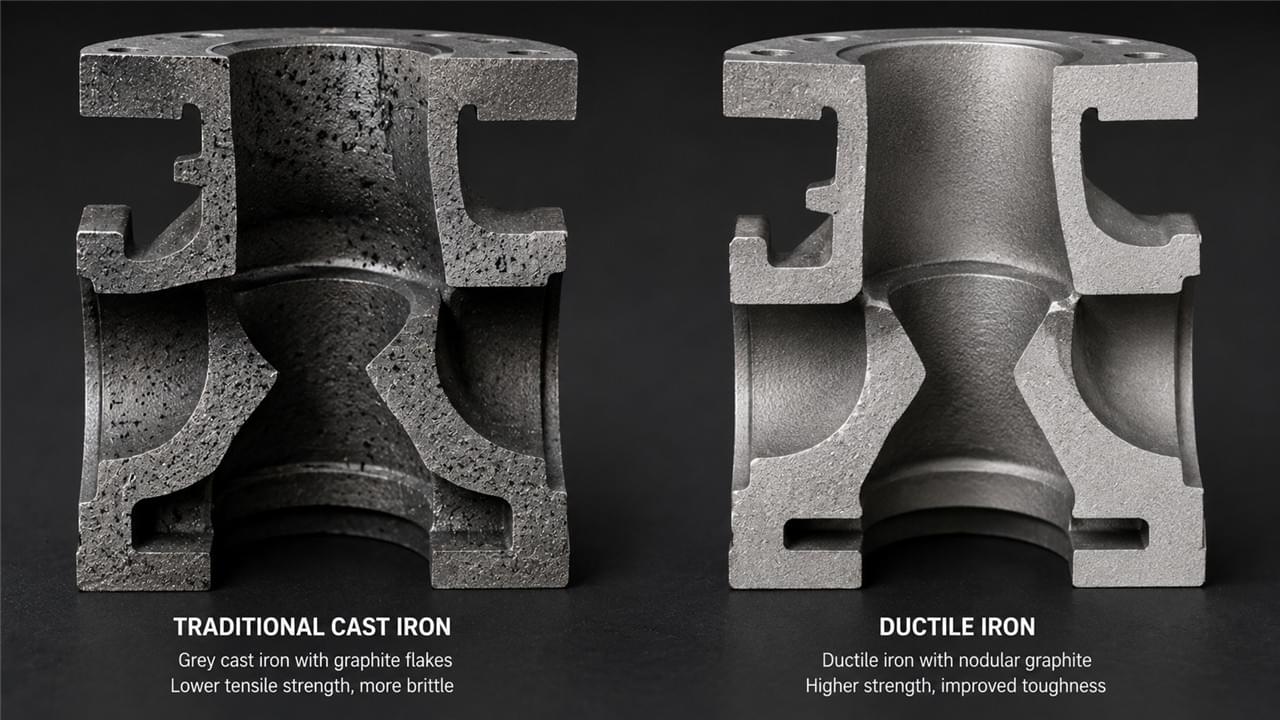
Don’t let the configuration debate distract you from material quality. Both Hongjiu’s HDG and HNG series use ductile iron 450 (GGG-50) for all pressure-bearing components. This material delivers over 450 MPa tensile strength — more than double standard gray cast iron — with a 2.5 MPa pressure rating and anti-freeze protection to -15°C.
According to standard pump engineering reference data, material selection directly influences the pump’s pressure-temperature rating, corrosion resistance, and long-term dimensional stability. Ductile iron’s superior elongation prevents the brittle fracture that can destroy a cast iron pump during a pressure surge or freeze event.
Make the Right Configuration Decision
There is no universal winner in the vertical vs horizontal water pump debate. Each configuration excels in its ideal application. The key is matching the pump type to your project’s space constraints, maintenance philosophy, piping layout, and long-term operating conditions.
Our application engineers will analyze your specifications and recommend the optimal pump type, size, and motor configuration — typically within 24 hours and always with transparent factory-direct pricing.
Request Your Free Pump Selection Consultation — Get expert recommendations with complete performance data.
Explore HDG Vertical Inline Pumps — Space-saving design for HVAC and circulation.
Explore HNG Horizontal End-Suction Pumps — Easy-maintenance design for water supply and industrial use. Also see our HZX self-priming sewage pumps for wastewater applications.
Anhui Hongjiu Water Pump Equipment Co., Ltd. — Every pump engineered for your specific application.